Your facility needs consistent cleaning schedules tailored to specific risks, processing volumes, food allergens, and regulatory visits, including verifiable documentation confirming food safety measures, compliance audits, and public health regulations. The information following give guidance on sanitation program requirements.
Main Points
- Sanitation experts in Brampton cater to restaurants, grocery departments, commissaries, warehouses, bakeries, schools, mobile vendors, and allergen-sensitive operations.
- Compartmentalized approaches treat frequently contacted areas, food-contact equipment, kitchens, floors, drains, restrooms, and storage areas for avoiding cross-contamination.
- Confirmation of approved sanitizer dilution, appropriateness, and contact time is conducted by qualified vendors, with finalization filed using swabs, reviews, and action records.
- Optimal cleaning timelines factor in hazard, production volume, transitions, spills, and regulations when designating daily, regular, and seasonal duties by area.
- Choose providers with HACCP, sanitation, competency, WHMIS, instruction, protection, endorsements, colour-coded equipment, and inspection-ready sanitation records.
Brampton Venues That Need Food Safety Cleaning: Which Ones?
Any Brampton facility that handles, maintains, prepares, packages, or offers food needs sanitation protocols. You must implement it if your facility falls under health inspection, premises standards, or HACCP protocols. That requirement covers food service venues, employee cafes, supply centers, retail departments, meat shops, fish areas, local stores, and institutional food prep areas.
Adherent sanitation standards continues to be necessary in supply warehouses, processing plants, freezer locations, commercial bakeries, school food programs, reception facilities, and food delivery centers. Mobile and temporary operations are included, examples being food trucks, event sellers, and temporary stalls. Your location needs established hygiene documentation should your employees prepare supplies, portion finished foods, reheat dishes, or organize allergen inventory. In Brampton, sanitation remains not discretionary; it comprises legal, operational, and consumer protection compliance.
What Do Brampton Cleaning Experts Clean?
You need cleaning experts who sanitize high-touch surfaces, kitchen areas, floor surfaces, and bathrooms to meet food safety and public health standards. They target these areas because they present the highest risk for cross-contamination, slipping risks, and sanitation breaches.
Knowing their service areas allows you to confirm your facility's cleaning meets required standards and regulations.
High-Touch Surface Cleaning
Expert janitorial teams stress high-touch surface cleaning due to the potential of pathogens and contaminants distributing across your space. You require a formal plan for sanitizing door handles, push plates, switches, railings, shared equipment controls, POS terminals, and refrigerator pulls. Implementing area assessment techniques, professionals pinpoint every commonly touched area and set cleaning schedule
Validating sanitizing agent specifications, solution strength, and exposure duration confirms following product specifications and food safety requirements to sustain proper function. Professionals can apply swab testing to check cleaning effectiveness
Kitchens, Floors, and Restrooms
Brampton cleaning services zero in on kitchens, floors, and restrooms as each zone presents different food safety, accident, and public health concerns. In industrial kitchens, you need degreasing on cook lines, equipment exteriors, drains, prep surfaces, and splash zones to reduce contamination and pest pressure.
Floor care that is recorded should equally be anticipated. Technicians clean and remove buildup from grout, tile, and vinyl flooring, then apply suitable dehydration methods so you can limit falls and maintain code-compliant conditions. They also handle entryways where moisture and debris migrate indoors.
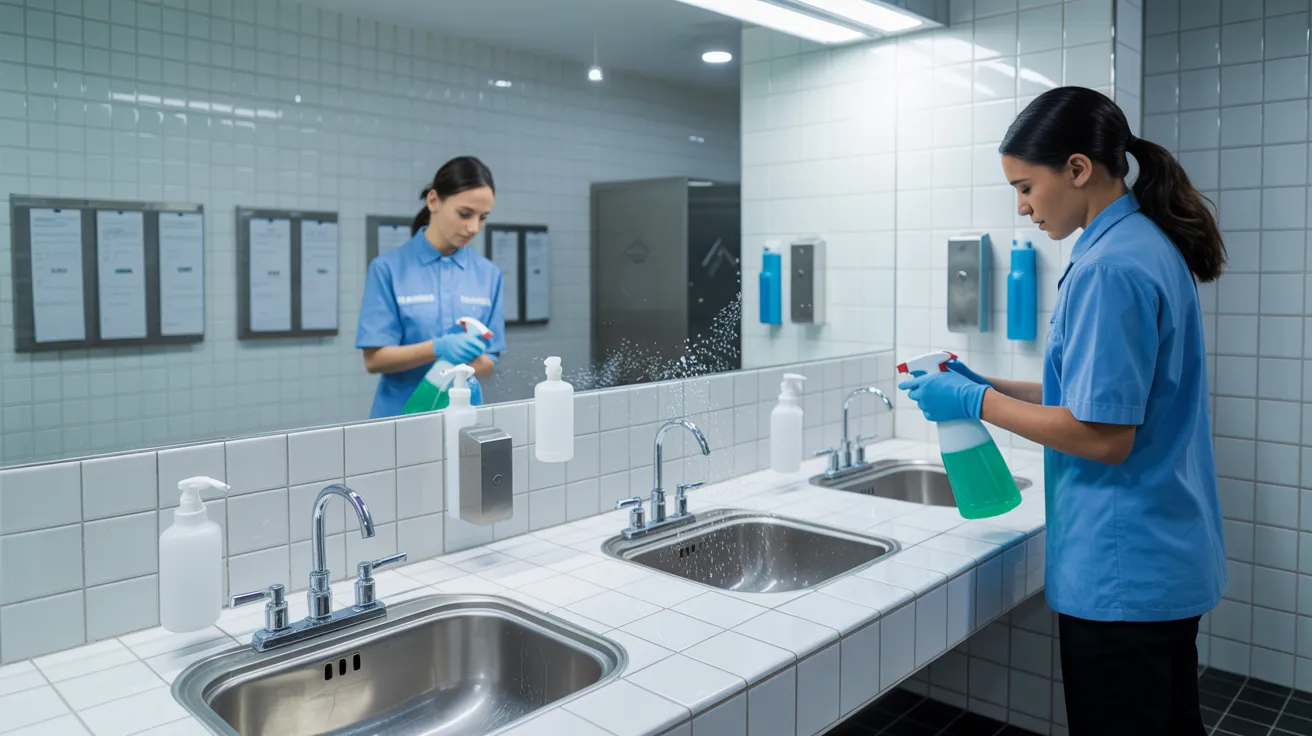
For restroom sanitation, cleaners sanitize touchpoints, fixtures, partitions, dispensers, and waste containers, then refill items and eliminate smells. They also service restaurant moprooms, where chemical storage, sink hygiene, and drainage conditions can affect sanitation compliance and staff safety daily.
Why Food Safety Cleaning Matters in Brampton
In Brampton, you must maintain sanitary cleaning practices to satisfy health code requirements and achieve compliance. You also minimize bacterial spread through proper cleaning of food-preparation surfaces, appliances, and frequently-touched items. Most importantly, you safeguard community wellness by reducing the chance of food poisoning in your establishment.
Regulatory Code Requirements
Since Brampton food companies must follow rigorous sanitary regulations, your food safety cleaning directly affects your capacity to satisfy health codes, safeguard diners, and eliminate regulatory penalties. You must maintain sanitary food-contact surfaces, written maintenance records, correct sanitizer application, and verifiable staff procedures that correspond to municipal and provincial inspection expectations.
Well-maintained cleaning files assist you in showing due diligence during regulatory audits and confirming your procedures follow uniform patterns that are repeatable and documented.
Cross-Contamination Prevention
Meeting health code standards also depends on your capacity to stop cross-contamination during routine food preparation and sanitation. You must separate raw ingredients from ready-to-eat foods, sanitize prep surfaces between tasks, and store chemicals away from food-contact items. Established guidelines minimize contamination chances and support consistent compliance during inspections.
You might establish allergen separation to stop main allergens from reaching common areas, containers, or machinery. Use dedicated cutting boards, color-coded tools, and strict utensil labeling so staff don't mix items throughout cooking or delivery. Mandate handwashing after handling raw meat, seafood, eggs, or allergen-containing products. Swap cleaning rags frequently, and test disinfectant concentration using strips. When you train staff to follow these controls each shift, you create a cleaner, safer operation that matches Brampton's safety requirements daily.
Community Health Protection
When sanitation protocols breaks down, you don't just risk a failed inspection—you increase the chance of foodborne illness impacting customers, staff, and the wider Brampton community. You also undermine your responsibility in protecting public health, especially in high-traffic food premises where pathogens travel quickly through surfaces, equipment, and touchpoints.
You must establish cleaning procedures that eliminate soils, sanitize properly, and confirm effectiveness. This requires following exposure times, employing authorized sanitizers, logging schedules, and instructing staff to meet regulatory standards. These mechanisms support pathogen reduction by decreasing microbes before reaching food or hands. Across Brampton, strong cleaning protects at-risk populations, reduces disease potential, and shows your diligence. When you follow standards, you go beyond requirements—you substantially lower hazards and enable safer food service throughout the area.
How Can Cleaning Practices Ensure Food Safety Compliance?
Comprehensive cleaning schedules ensure food safety compliance by minimizing contamination hazards, preventing pathogen multiplication, and keeping your facility aligned with sanitation requirements under HACCP-based programs and public health regulations. You confirm that contact surfaces remain visibly clean and microbiologically controlled, backing documented preventive controls and inspection readiness.
Effective cleaning also strengthens allergen management by extracting residues that can lead to undeclared allergen exposure. by removing residues that can provoke undeclared allergen exposure.
What's the Best Time to Schedule Commercial Cleaning?
food-contact surfaces, bathrooms, and high-contact areas
handled independently
Finding Quality Brampton Cleaning Experts: A Guide
Begin by evaluating providers based on food-safe sanitation requirements—not solely on price alone. You should confirm that each organization comprehends CFIA, public health, and HACCP-aligned expectations applicable to your facility. Request insurance certificates, WHMIS compliance, staff training documentation, and oversight procedures. Assess whether technicians recognize cross-contamination risks, chemical handling protocols, and verifiable sanitation records.
Additionally, you need to evaluate operational reliability and accountability. Obtain references from food facilities in Brampton, then review response times, corrective measures, and communication standards. Verify the company conducts supplier reviews and can deliver inspection-ready documentation when inspectors or external parties need proof. Verify equipment is maintained, color-coded equipment are applied correctly, and location-specific dangers are identified. A qualified provider protects compliance, product source integrity, and your reputation.
What aspects should a sanitation plan include?
Create a written plan that clearly outlines every sanitation task, standard, and responsibility before production starts. You should document cleaning frequencies, approved chemicals, dilution rates, contact times, tools, and verification methods for each area, section, and machine. Don't forget to add pre-operational inspections, corrective actions, and employee training requirements.
Your program should also address contamination prevention, garbage management, pest control procedures, and recorded timelines for bathrooms, drainage systems, surfaces, and food-preparation zones. Explain how you'll keep raw and prepared foods apart, enable ingredient tracking, and maintain accurate allergen labeling through validated cleaning between product changes. You should assign accountability, keep signed records, and review results against regulatory standards, HACCP controls, and customer requirements. When gaps appear, revise procedures immediately and retrain staff.
Regular Posed Questions
Can sanitation providers support nighttime operations in Brampton facilities?
Yes, you can contract sanitation providers to manage nighttime operations in Brampton facilities. You'll manage overnight sanitation around production schedules, security controls, and personnel requirements. Providers generally establish nightshift logistics to prevent disruption, copyright compliance, and document finished tasks. You should verify response times, management, lockout protocols, and waste management before service starts.
Are emergency spill response solutions provided from Brampton cleaning experts?
Yes, you can expect many Brampton cleaning experts to provide emergency spill response solutions. They manage hazardous materials, assess risks, isolate affected areas, and start rapid decontamination to minimize risk and business interruption. You should verify arrival timeframes, training certifications, safety procedures, and waste management. If your facility must meet health or food safety regulations, choose a provider that records events, follows compliant sanitation standards, and enables compliance verification.
Can green disinfectants be applied securely on food-handling equipment?
Absolutely, natural disinfectants prove to be appropriate for food preparation areas when you pick disinfectants approved for food contact and meeting regulatory standards. You must validate contact duration, dilution ratios, and rinse requirements before use. Natural-based solutions reduce chemical burden, though you should gather demonstration of efficacy against harmful bacteria. For ensuring residue-free conditions, adhere to exact manufacturer guidelines and confirm the disinfecting agent meets applicable food industry sanitation standards.
Will maintenance plans adjust for seasonal shifts?
Absolutely, sanitation programs are customizable for production fluctuations. Adapt frequencies, staff levels, cleaning agents, and validation steps to align with seasonal workflows while upholding compliance standards. Minimize equipment downtime through scheduling sanitation amid equipment transitions, peak volumes, and usage patterns. Also revise SSOPs, staff education, and environmental testing to address transient threats, additional allergens, or higher contamination levels. Continuous reviews keep the plan functional.
Will professional cleaning services teach your staff on hygiene best practices?
Certainly, professional cleaning experts coach your employees on hygiene protocols. You secure employee development on correct chemical practices, processing times, contamination control, machine disassembly, and documentation. They generally coordinate instruction with HACCP, GMP, and CFIA or regional health bodies standards. Many execute health assessments to check standards, identify gaps, and strengthen corrective measures. This enables you to copyright standard processes, pass inspections, and minimize foodborne pathogen risks every day.
Final Thoughts
When you partner with Brampton commercial cleaning and food safety experts, you aren't merely cleaning—you maintain your facility audit-prepared and your standards above board. From kitchens to processing floors, every polished surface and maintained area helps reduce pest intrusion and avoid expensive problems. By arranging cleanings at the proper frequency and following a clear cleaning plan, you protect staff, patrons, and your brand image. In a tightly regulated environment, sanitary conditions aren't optional—they're part of doing business right.